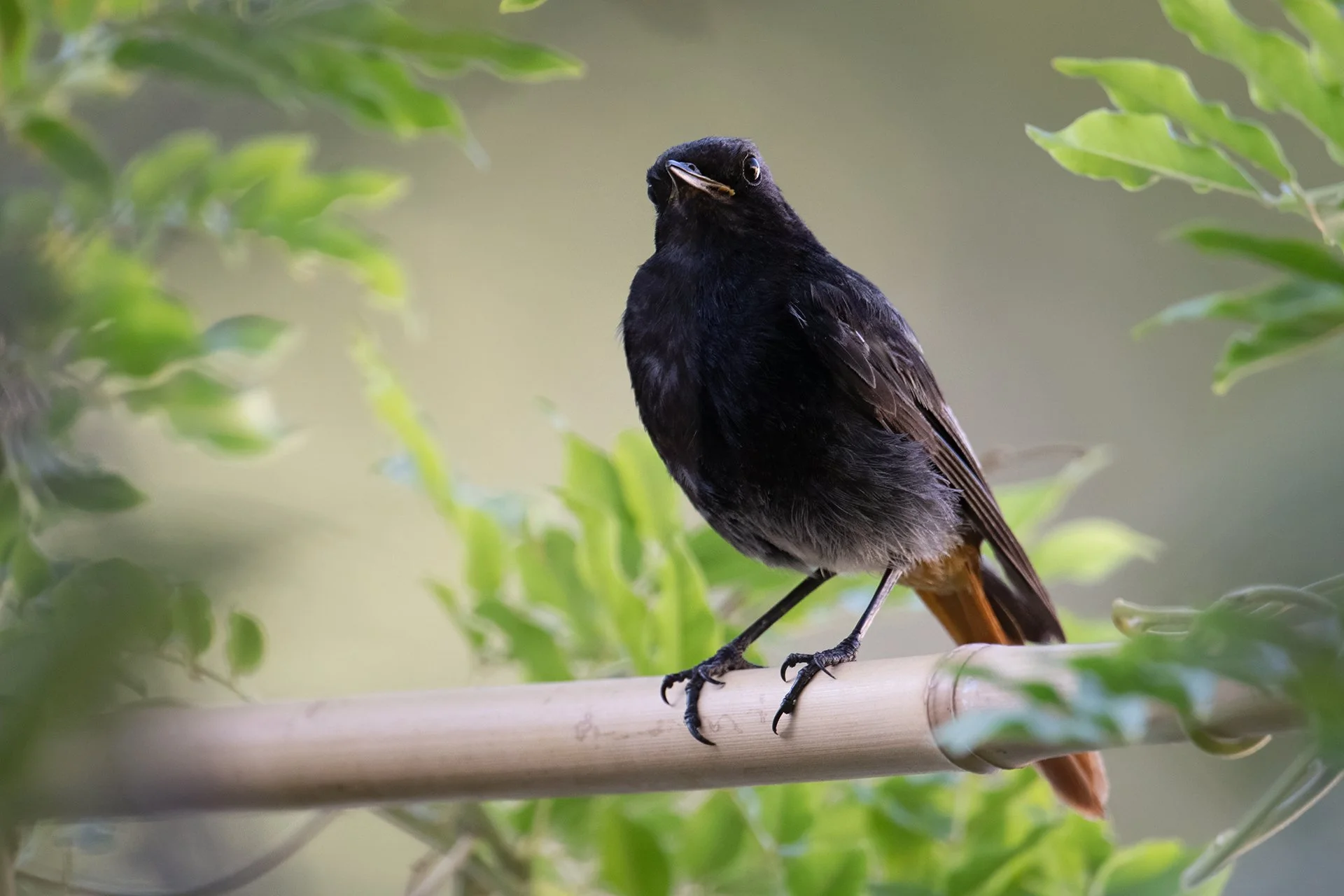
Black Redstart
5.8.2026 - 47° 22′ 36″ N / 8° 31′ 06″ E
Dressed almost entirely in charcoal black, with a tail that looks as though someone remembered color at the very last moment, the Black Redstart has perfected the art of understated confidence.
It doesn't rely on bright feathers or dramatic displays.
It simply arrives… and somehow becomes the most interesting bird around.
Unlike species that announce themselves with endless singing or theatrical courtship, the Black Redstart prefers a different strategy.
A quiet perch.
A watchful glance.
A subtle tail flick that says,
"I'm aware of everything. Carry on."
You'll often find it on rooftops, stone walls, mountain villages, or forgotten corners where others see only concrete and old timber.
The Black Redstart sees opportunity.
Perhaps that's its greatest talent.
It reminds us that you don't need to be the loudest, the brightest, or the busiest to stand out.
Sometimes, quiet confidence leaves the strongest impression.
Nikon Z9 - Nikkor Z 400 mm 1:4,5 VR S - TC-1.4x - ISO 1600 - f/6.3 - 1/500
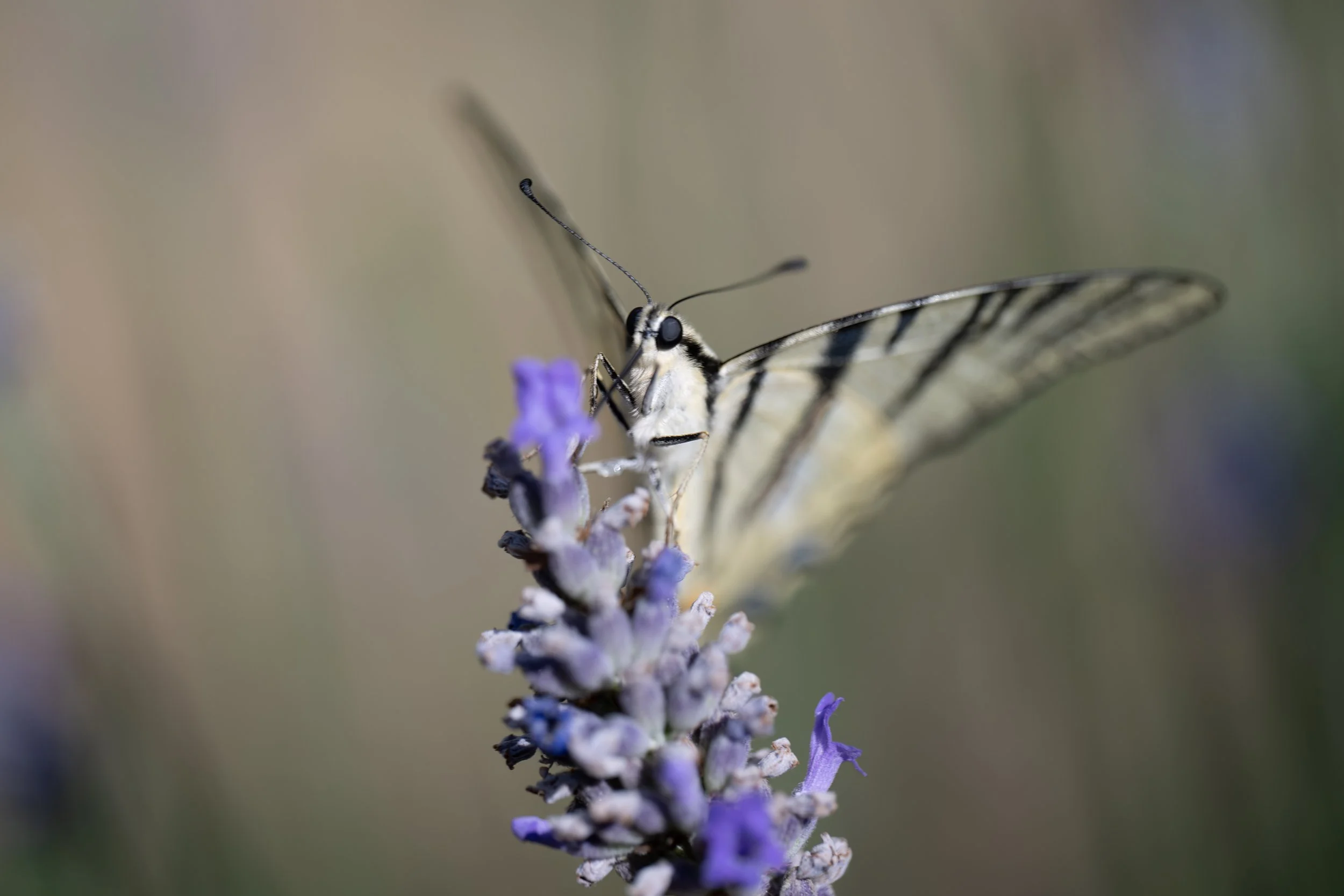
Scarce Swallowtail
19.7.2026 - 45° 04′ 20″ N / 6° 53′ 03″ E
With its long wings, elegant stripes, and graceful tail streamers, it looks less like an insect and more like something designed by an aeronautical engineer with a flair for Italian fashion.
While many butterflies seem permanently surprised by the wind, the Scarce Swallowtail moves with remarkable composure.
Scientists call it efficient flight.
The butterfly probably calls it elegance.
You'll often find it drifting between lavender, wildflowers, and sunny mountain slopes, looking as though it's inspecting the scenery rather than searching for nectar.
"Yes… this meadow will do."
Perhaps that's what makes it so captivating.
It never appears to be in a hurry.
In a world obsessed with speed, the Scarce Swallowtail quietly proves that sometimes the most impressive way to travel… is simply to glide.
Nikon Z9 - Nikkor Z MC 105 mm 1:2.8 VR S - ISO 64 - f/3.3 - 1/1000
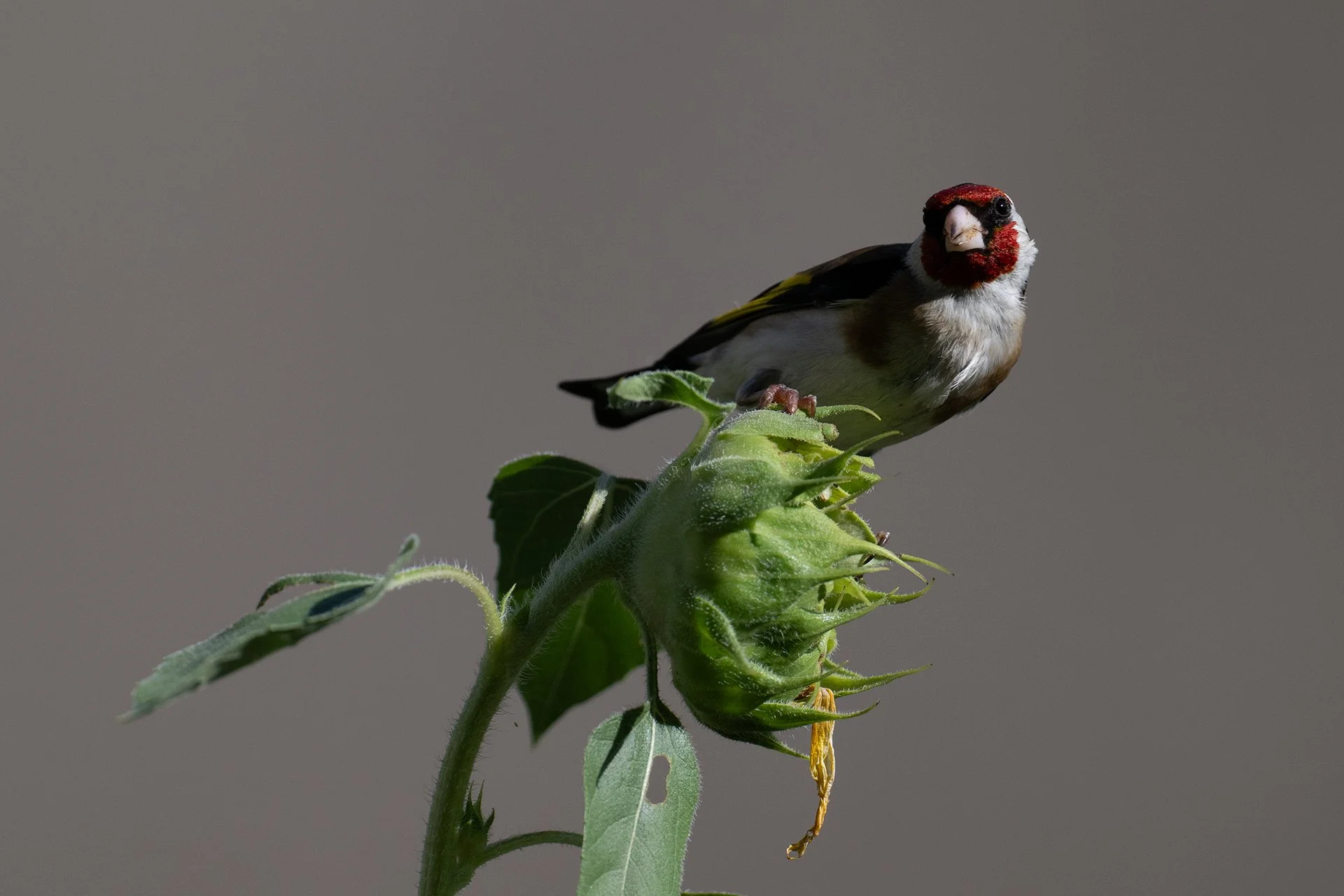
European Goldfinch
15.7.2026 - 47° 22′ 36″ N / 8° 31′ 06″ E
This bird looks as if someone couldn't decide on a colour palette.
Red face. Black and white head. Golden wings.
And somehow, it all works.
The European goldfinch dresses with remarkable confidence, as though subtlety were an unnecessary constraint. It perches delicately on thistles and sunflowers, extracting seeds with a precision that makes difficult things look effortless.
It has no interest in drama.
While other birds compete through size, strength, or volume, the goldfinch quietly relies on elegance, patience, and impeccable timing. Even its song feels less like an announcement and more like a conversation.
Scientists admire its specialised feeding techniques and remarkable agility.
Photographers admire the fact that it occasionally stays still for almost three seconds.
The goldfinch isn't trying to impress anyone.
It simply reminds us that standing out doesn't always require making the most noise. Sometimes, a little colour, quiet confidence, and knowing exactly where to land are more than enough.
Nikon Z9 - Nikkor Z 400 mm 1:4,5 VR S - ISO 640 - f/4.5 - 1/320
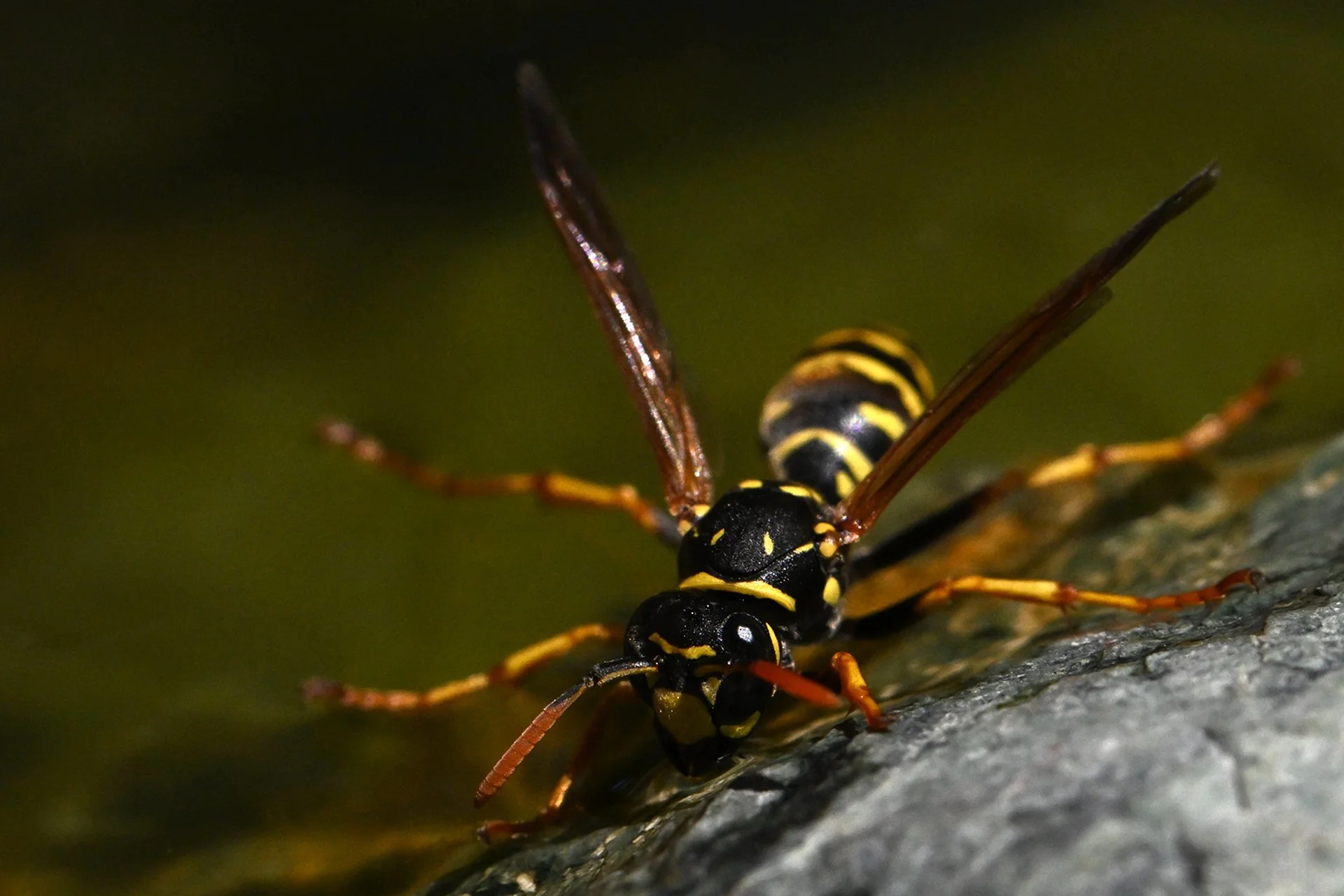
European Paper Wasp
2.3.2024 - 47° 22′ 36″ N / 8° 31′ 06″ E
It builds homes from wood.
But first, it needs water.
A paper wasp visits ponds and streams not to hunt, but to collect one of its most important building materials. Mixed with weathered wood and a little saliva, water becomes paper — the remarkably light material from which an entire colony is built.
Architecture, powered by rain.
Nikon Z9 - Nikkor Z MC 105 mm 1:2.8 VR S - ISO 2000 - f/14 - 1/3200
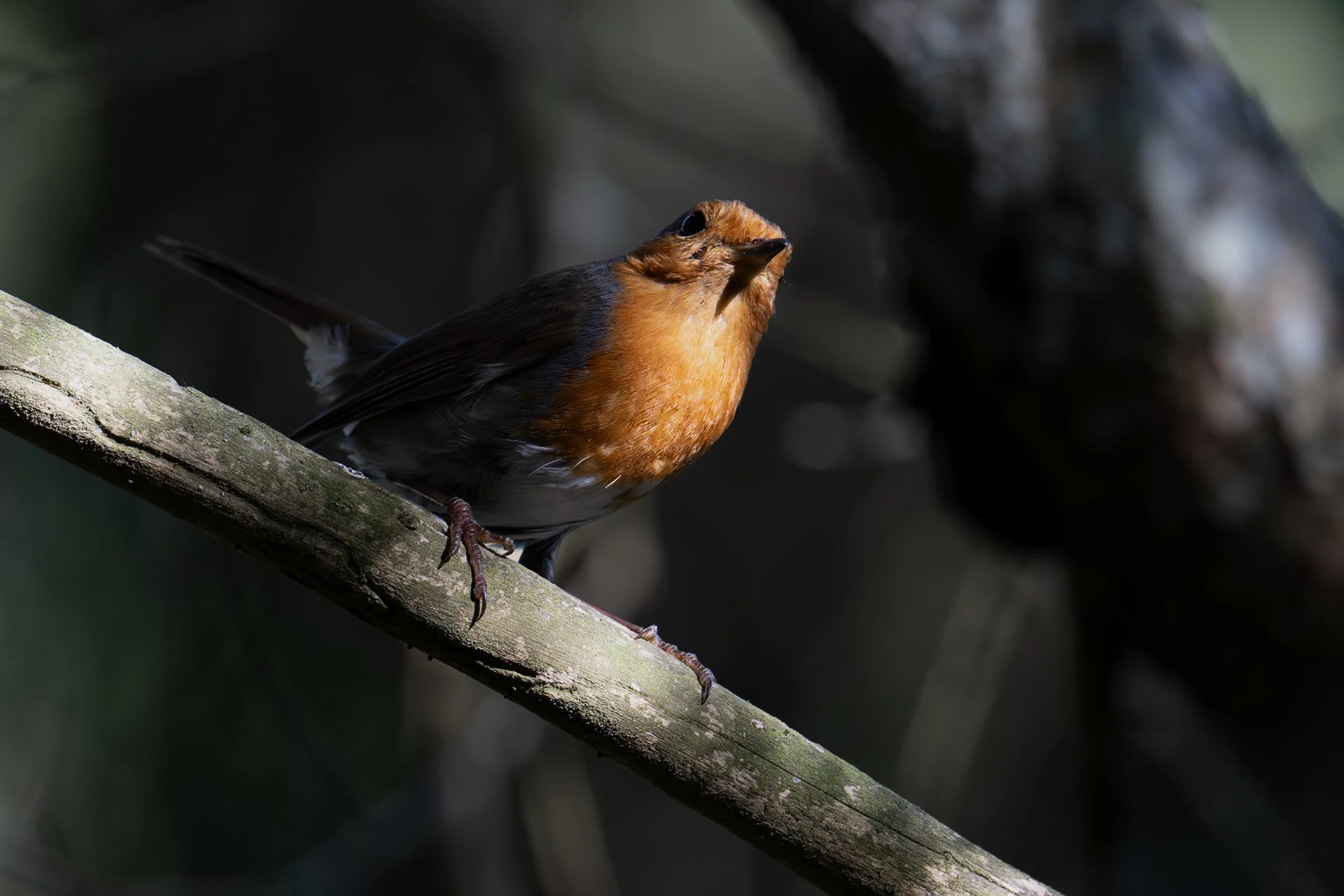
Robin
24.5.2026 - 47° 06′ 00″ N / 7° 07′ 55″ E
Every garden has that one neighbor who somehow knows everyone's business. In the bird world, that's the robin.
At first glance, robins look adorable. They have round little bodies, bright orange-red chests, and an expression that says, "Good morning, friend!". But don't be fooled. Behind that charming smile lies the confidence of a creature that weighs less than a chocolate bar yet behaves like it owns the entire neighborhood.
Robins are famous for following gardeners around. Some people think they're being friendly. Others suspect they're simply supervising.
"Dig faster, human. There might be worms!".
Unlike many birds that flee at the slightest disturbance, robins often stand their ground and stare directly into your soul. Scientists call this curiosity. I call it quality control.
And let's talk about their singing. At dawn, while most sensible creatures are still asleep, robins are already delivering what can only be described as a one-bird concert tour. No ticket sales. No sound check. Just pure confidence.
Perhaps the most impressive thing about robins is their ability to look simultaneously cute and mildly offended. Every photograph of a robin seems to capture the exact moment it discovered that someone parked in its reserved space.
Yet despite their attitude, it's impossible not to like them. They brighten winter days, add color to grey gardens, and remind us that confidence is not about size—it's about acting as if you personally approved the design of the entire ecosystem.
So the next time a robin watches you from a fence post, remember: you're not observing the robin.
The robin is observing you.
And honestly, you're probably doing a mediocre job of gardening.
Nikon Z9 - Nikkor Z 400 mm 1:4,5 VR S - ISO 800 - f/4.5 - 1/400
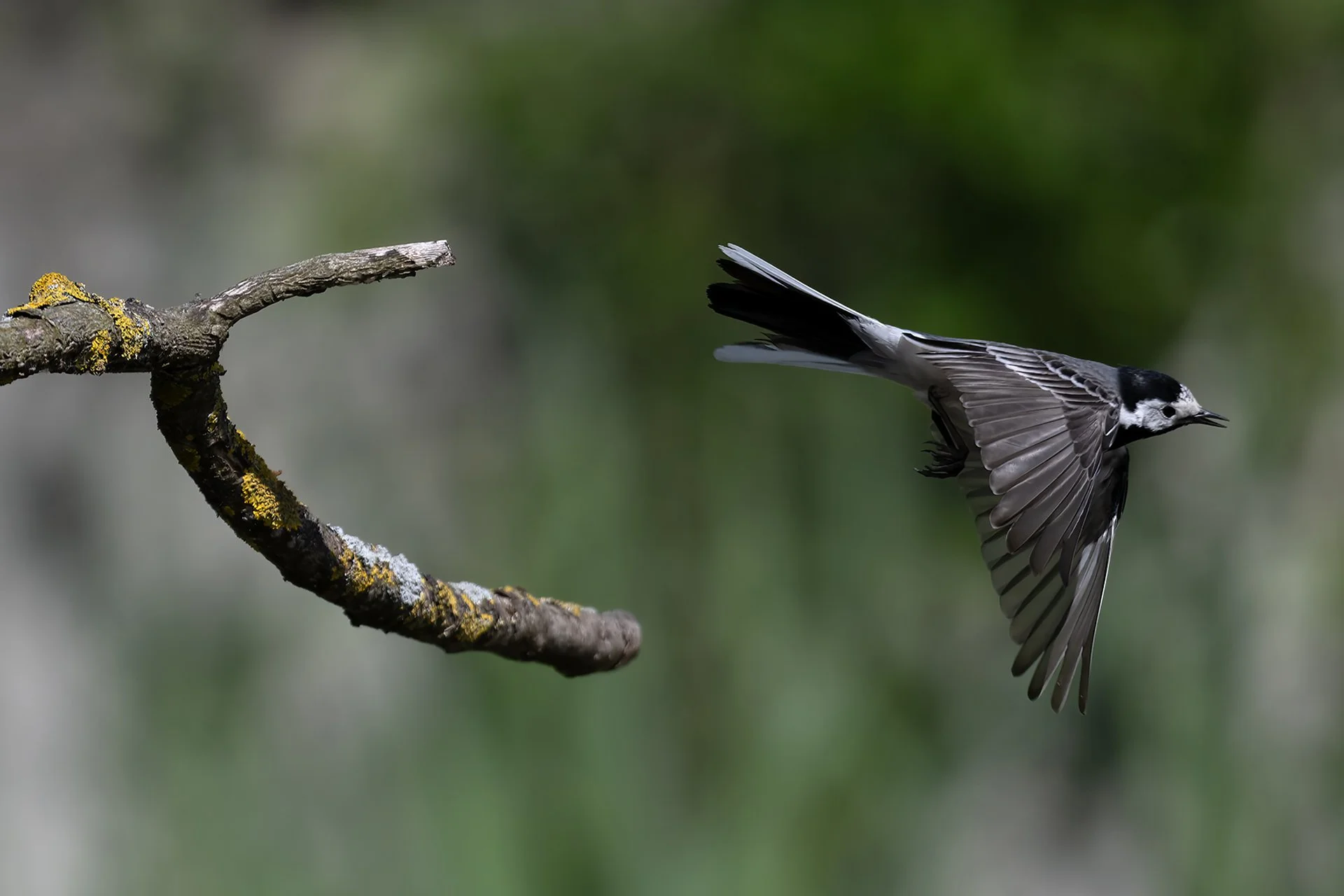
White Wagtail
17.5.2026 - 46° 58′ 30″ N / 7° 03′ 16″ E
White Wagtail
Some birds look majestic. Eagles, for example. Or swans, who always seem like they have a personal stylist on standby.
And then there’s the White Wagtail.
Small. Nervous. Constantly looking mildly offended.
And yet somehow it manages to do what many humans can’t: look elegant in complete chaos.
This photo captures the wagtail mid-flight — probably on its way to something extremely important. Maybe an insect conference. Maybe just the next fence post from which to silently judge other birds.
Particularly impressive is its famous tail wagging. Ornithologists probably have highly scientific explanations for it. To me, it looks more like the bird is permanently dancing to music only it can hear. Something between jazz and low-level panic.
And then there’s that expression.
A perfect mix of:
“I absolutely know what I’m doing.”
and
“Wait… where are the brakes?”
What I like about wagtails is that they don’t even try to be majestic. No peacock drama. No eagle theatrics. They just zip around looking oddly well-dressed, reminding us that even with short legs and slightly chaotic energy, you can still get surprisingly far.
Honestly, the perfect bird for modern life.
Nikon Z9 - Nikkor Z 400 mm 1:4,5 VR S - TC-1.4x - ISO 640 - f/6.3 - 1/4000
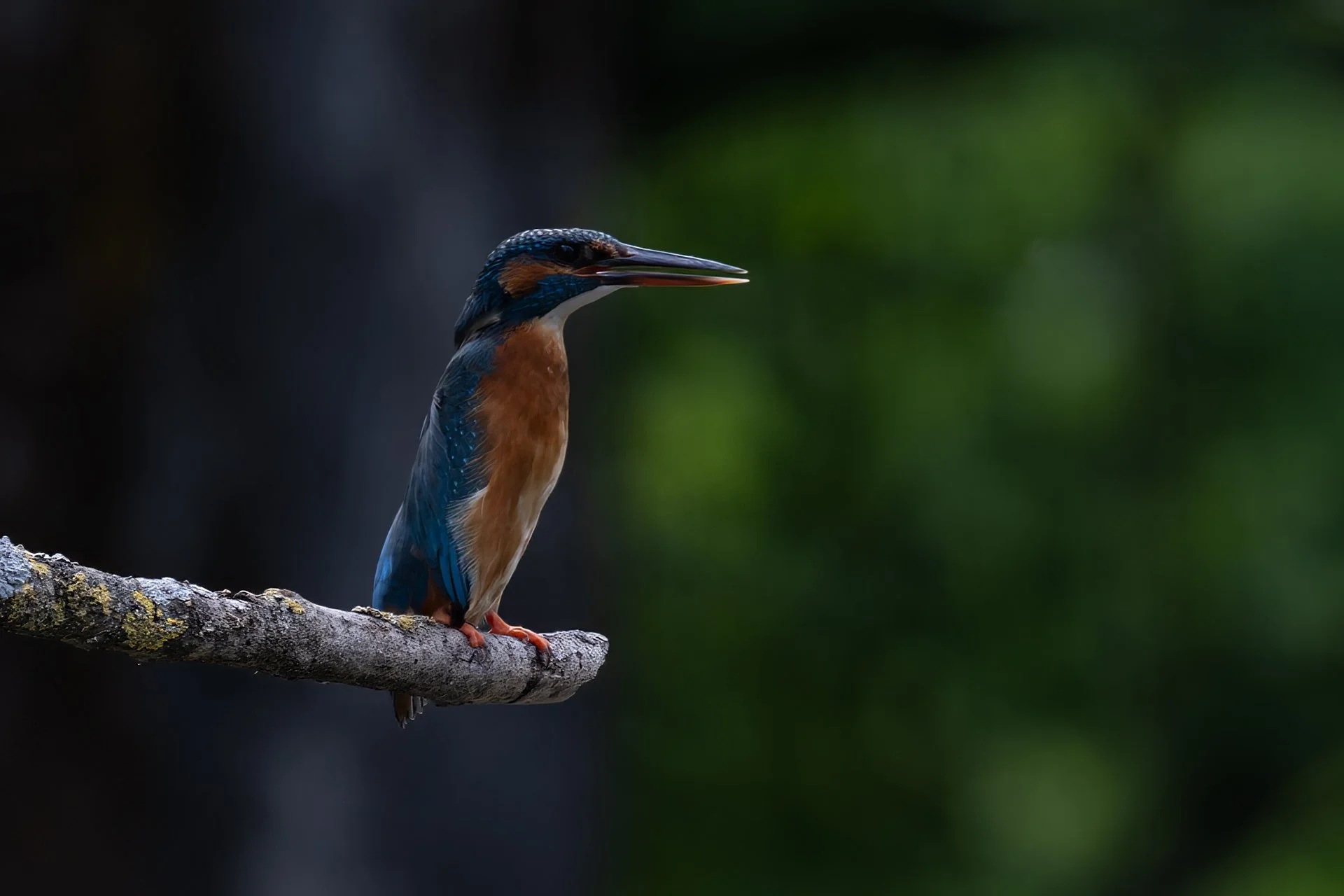
Martin-Pêcheur
16.5.2026 - 46° 58′ 30″ N / 7° 03′ 16″ E
This bird looks like it was designed by someone who refused to believe camouflage was necessary.
The kingfisher — electric blue, copper orange, permanently overdressed — flies low over rivers like a gemstone with velocity issues.
It spends hours sitting perfectly still.
Then suddenly becomes a spear.
With a dive so fast it barely seems real, it hits the water, catches a fish, and returns to its branch as if this level of precision were completely routine.
Which, to be fair, it is.
Unlike swans, eagles, or owls, the kingfisher never built a reputation around symbolism or grandeur. No kingdoms. No wisdom. No dramatic poetry about destiny.
Just focus.
It digs tunnels into riverbanks, minds its business, and turns patience into a hunting strategy. Scientists admire its eyesight and reaction speed.
Observers mostly just stare and say, “Wait, was that actually blue?”.
The kingfisher is not loud about its abilities. It is a reminder that mastery can look effortless — and that sometimes the most extraordinary thing in nature is absolute precision wrapped in impossible colour.
Nikon Z9 - Nikkor Z 400 mm 1:4,5 VR S - TC-1.4x - ISO 500 - f/6.3 - 1/640
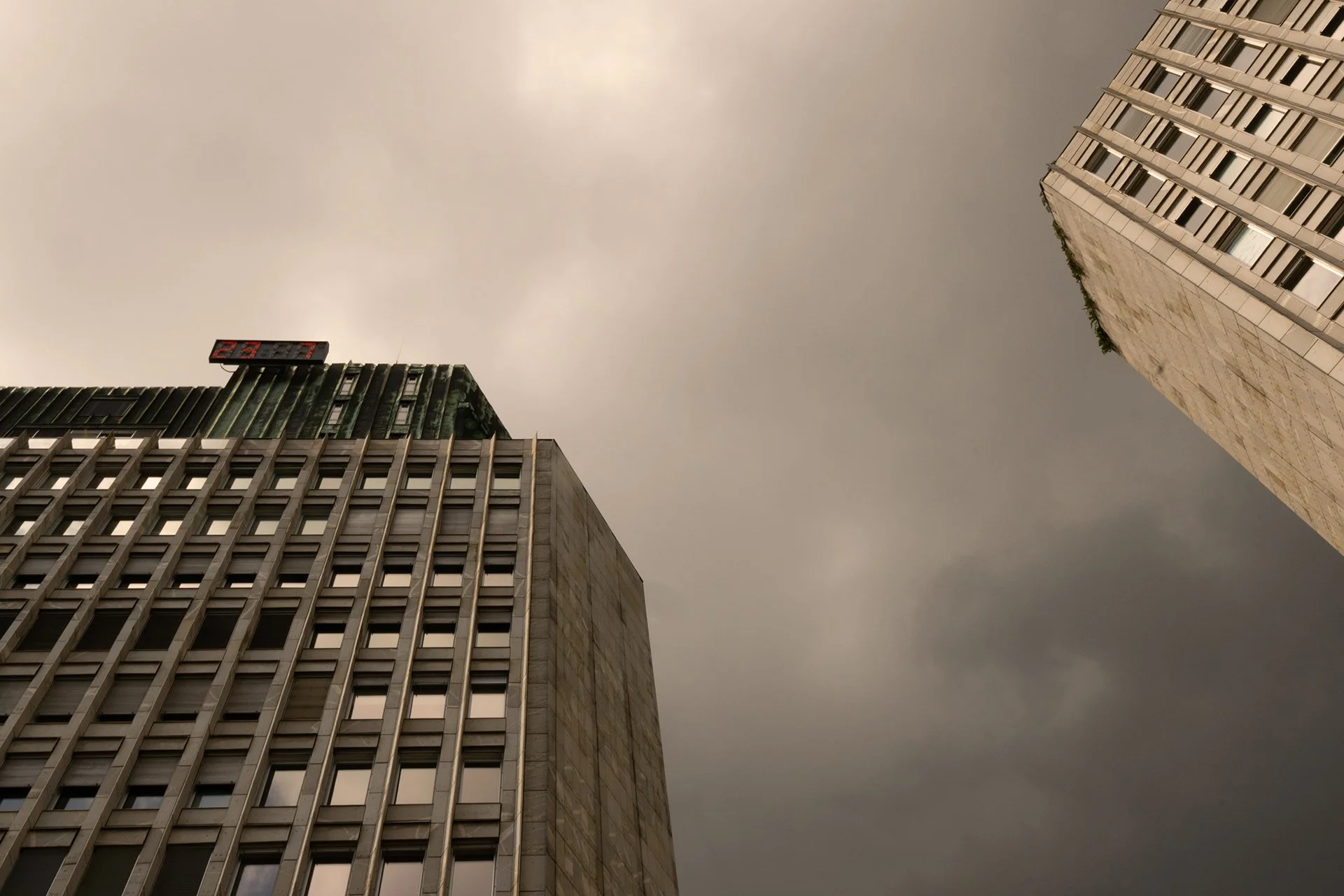
TR2 & TR3 at Trg Republike
23.7.2024 - 46° 03′ 03″ N / 14° 30′ 05″ E
The towers of Republic Square in Ljubljana do not try to charm you. They loom.
Dark, rigid, repetitive — as if architect Edvard Ravnikar wanted to prove that windows themselves could become ideological.
Ravnikar was a student of Jože Plečnik, the man who gave Ljubljana its poetic bridges, columns, markets, and human-scale romance. Then the student grew up and decided poetry was inefficient.
So instead of decorating the city, he reorganized it.
Republic Square was supposed to be monumental: a stage for the socialist future. Wide empty surfaces. Administrative towers. Geometry so severe it almost feels disciplinary. The kind of place where you instinctively lower your voice even though nobody asked you to.
And then there are the towers themselves.
Those giant office slabs with the glowing red digital clock on top — looking less like buildings and more like surveillance devices waiting for instructions from orbit.
When they were built in the 1970s, the electronic displays were considered futuristic. People in Yugoslavia reportedly saw them as symbols of technological progress.
Today they look wonderfully cyberpunk. Especially in bad weather. Especially when the clouds hang low and the concrete turns almost black.
You stand beneath them and suddenly Ljubljana no longer feels like the cozy Central European capital of cafés and dragons.
It feels like the headquarters of a government ministry in a dystopian film where everyone smokes indoors and speaks in carefully measured sentences.
And yet the strange thing is this:
The towers work. Not because they are comfortable. Not because they are warm. Certainly not because they are lovable.
But because Ravnikar understood something many architects fear admitting:
A city sometimes needs buildings that are willing to be disliked. Architecture this severe forces itself into memory. You may not want to live there. But you will absolutely look up.
Nikon Z9 - Nikkor Z 24-70 mm 1:2.8 S - ISO 320 - f/22 - 1/125
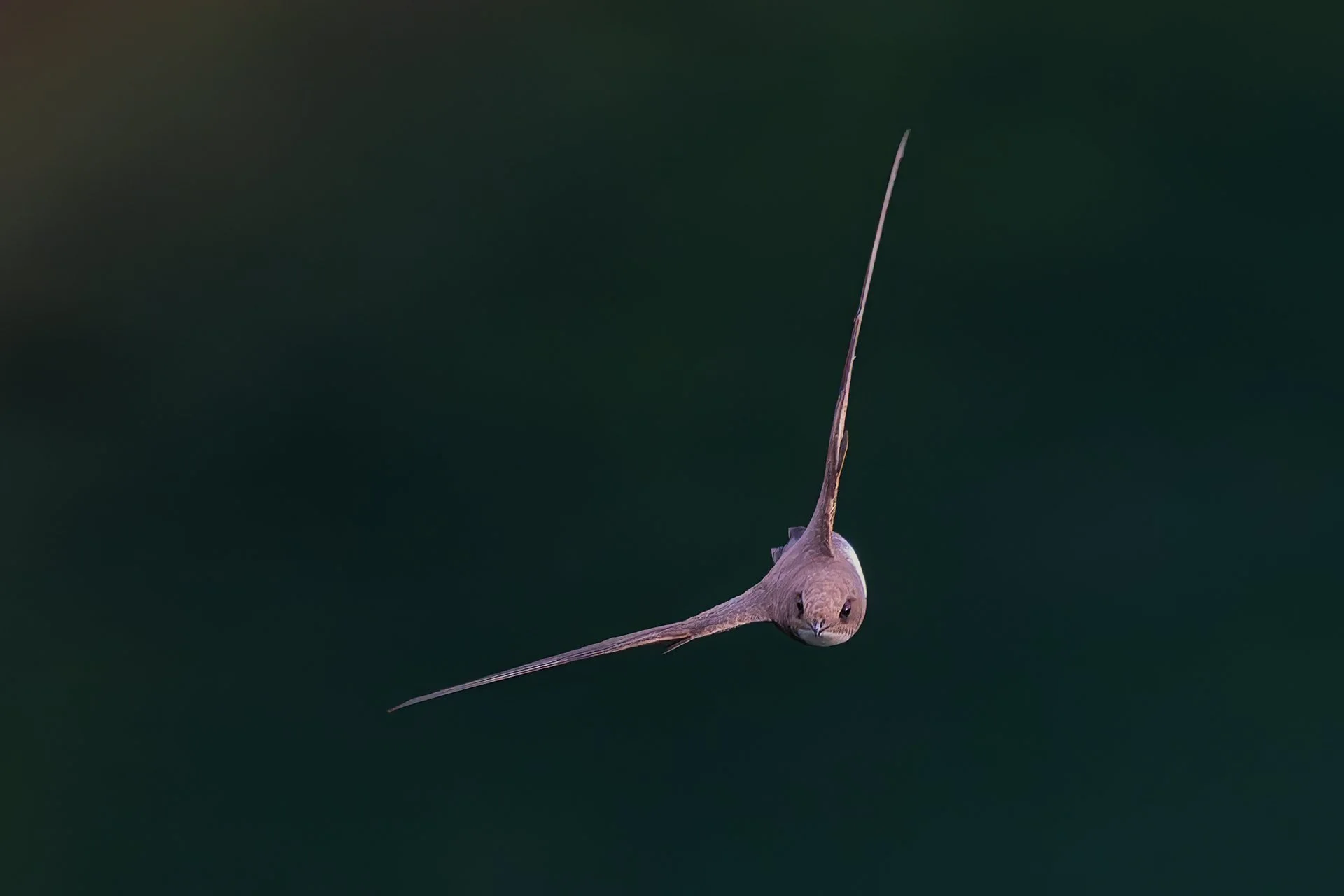
Alpine Swift
10.5.2026 - 46° 57′ 10″ N / 7° 26′ 36″ E
This bird weighs little more than a handful of folded notes.
And spends most of its life in the air as if gravity were merely a suggestion.
The Alpine swift — long-winged, pale-throated, and built like a living crescent — doesn’t fly so much as inhabit the sky completely. Its movements are too fluid to feel mechanical. Every turn appears pre-decided by the wind itself.
Landing is an interruption, not a habit.
With wings stretched wide and a body shaped for endurance, it can remain airborne for astonishing lengths of time, feeding, climbing, gliding, even resting while suspended above the world below. It hunts insects at altitude, cutting silently through invisible currents few other birds ever reach.
Where the mountains rise, it rises higher.
Unlike birds that demand attention through color or sound, the Alpine swift is easy to overlook — until it passes overhead. Then suddenly the sky has scale, speed, and intention.
It nests on cliffs, high walls, and hidden ledges — places difficult to reach and easy to trust.
A species that prefers distance over display.
Alpine swifts survive through efficiency refined almost beyond visibility: narrow wings, minimal drag, constant motion. Scientists describe them as masters of aerial endurance.
Observers describe them as creatures that forgot how to come back down.
The Alpine swift is not dramatic. It’s a reminder that freedom is sometimes less about escape — and more about finding a way to remain aloft longer than anyone thought possible.
Nikon Z9 - Nikkor Z 400 mm 1:4,5 VR S - ISO 2500 - f/4.5 - 1/2500
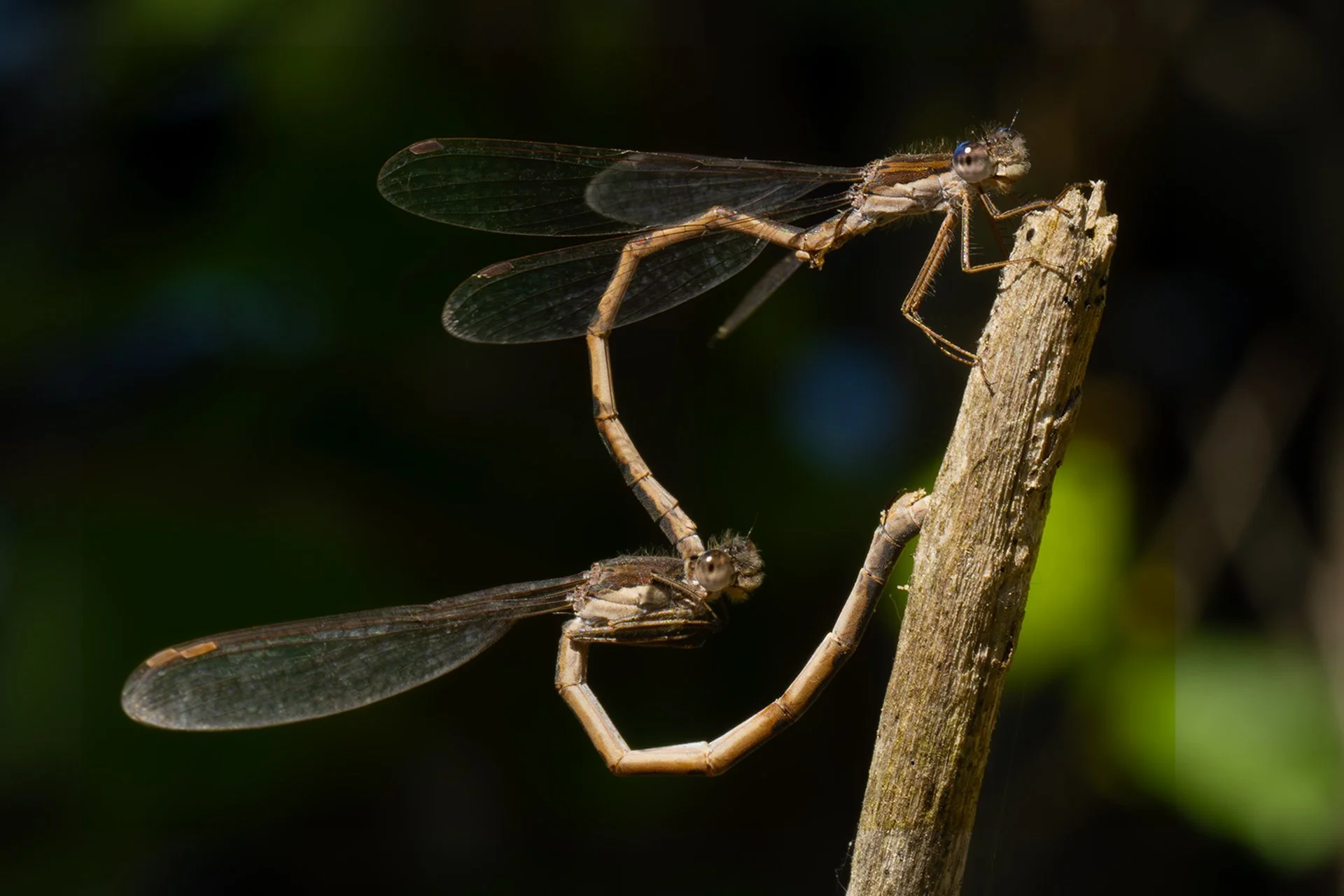
Horseshoe Damselfly
1.5.2026 - 47° 37′ 19″ N / 8° 42′ 17″ E
This is their idea of romance: For these damselflies there are no sunsets, no poetry, no dramatic build-up.
Just… a loop.
He grabs on. She bends around. Together they assemble what looks suspiciously like a flying paperclip with commitment issues.
No music. No flirting. No “getting to know you.” Just: ah, yes — this configuration will do.
For animals that spend most of their lives darting around like tiny helicopters, this is the closest thing to standing still.
It lasts exactly as long as necessary. Not a second more. Then it’s over. They disengage with the emotional weight of two people stepping off an escalator. No looking back. No awkward pause. No “text me when you get home.”
Back to business: flying, hunting, pretending the entire situation never happened.
If there is such a thing as romance here, it’s deeply practical.
Efficient. Functional. Slightly absurd to look at.
And, in its own way, perfectly put together.
Nikon Z9 - Nikkor Z MC 105 mm 1:2.8 VR S - ISO 640 - f/25 - 1/160
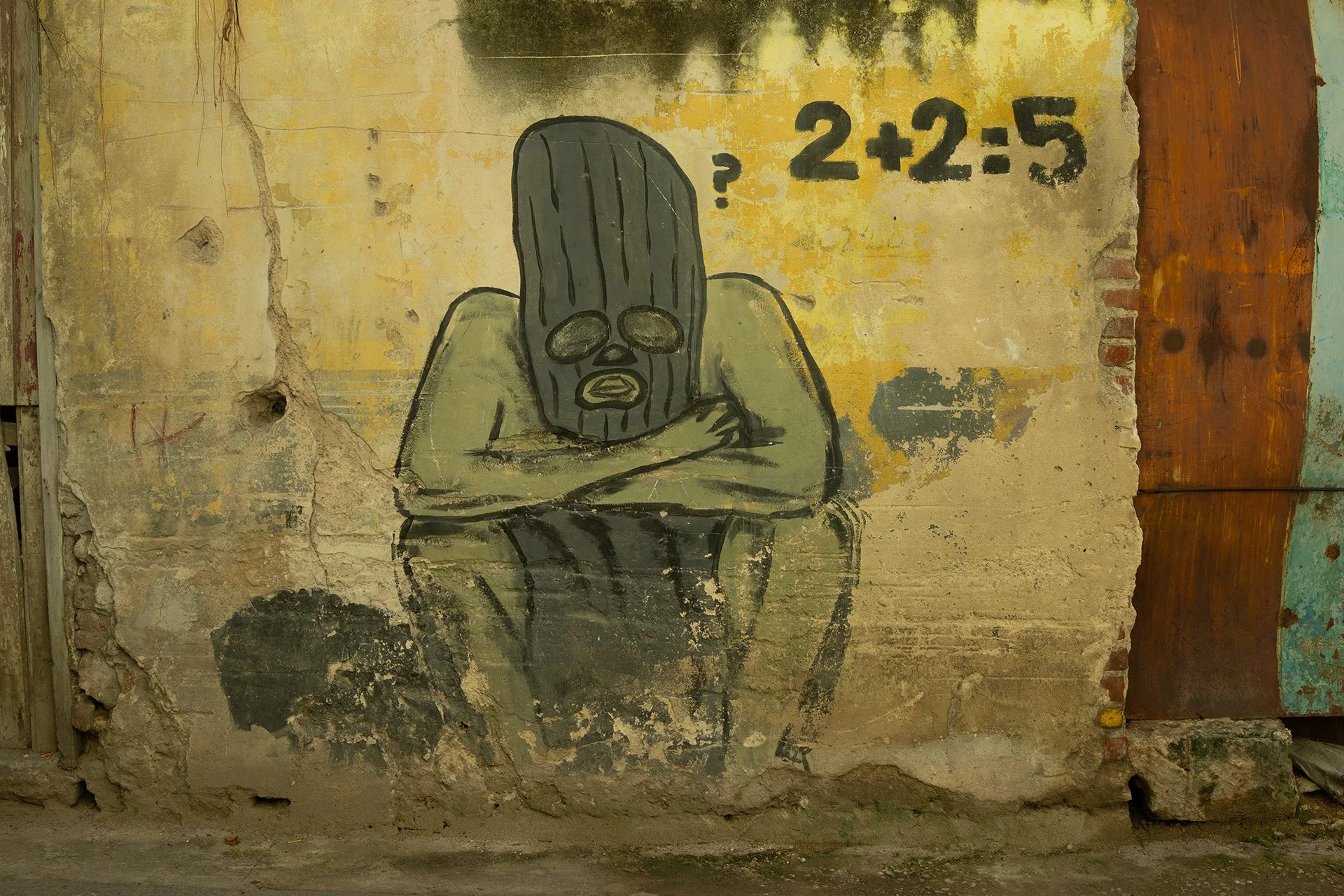
El Hombre del Saco
26.12.2019 - 23° 6′ 0″ N / 82° 22′ 0″ W
2 + 2 = 5 is not a mistake here.
It’s a joke not everyone understands.
A comment not everyone would say out loud.
And a small piece of truth disguised as nonsense.
The work is by Fabián López, who leaves behind exactly these kinds of quiet, biting images in the streets of Havana. His figure—often thought of as “El Hombre del Saco”, this nameless, masked character somewhere between observer and participant—sits there as if he has already understood the equation. Or given up on it.
Or, as an artist in Havana might put it:
“If the equation doesn’t add up, don’t check the numbers. Check who wrote them.”
Sony RX1R II - Zeiss Sonnar T 35 mm 1:2 - ISO 100 - f/8 - 1/160
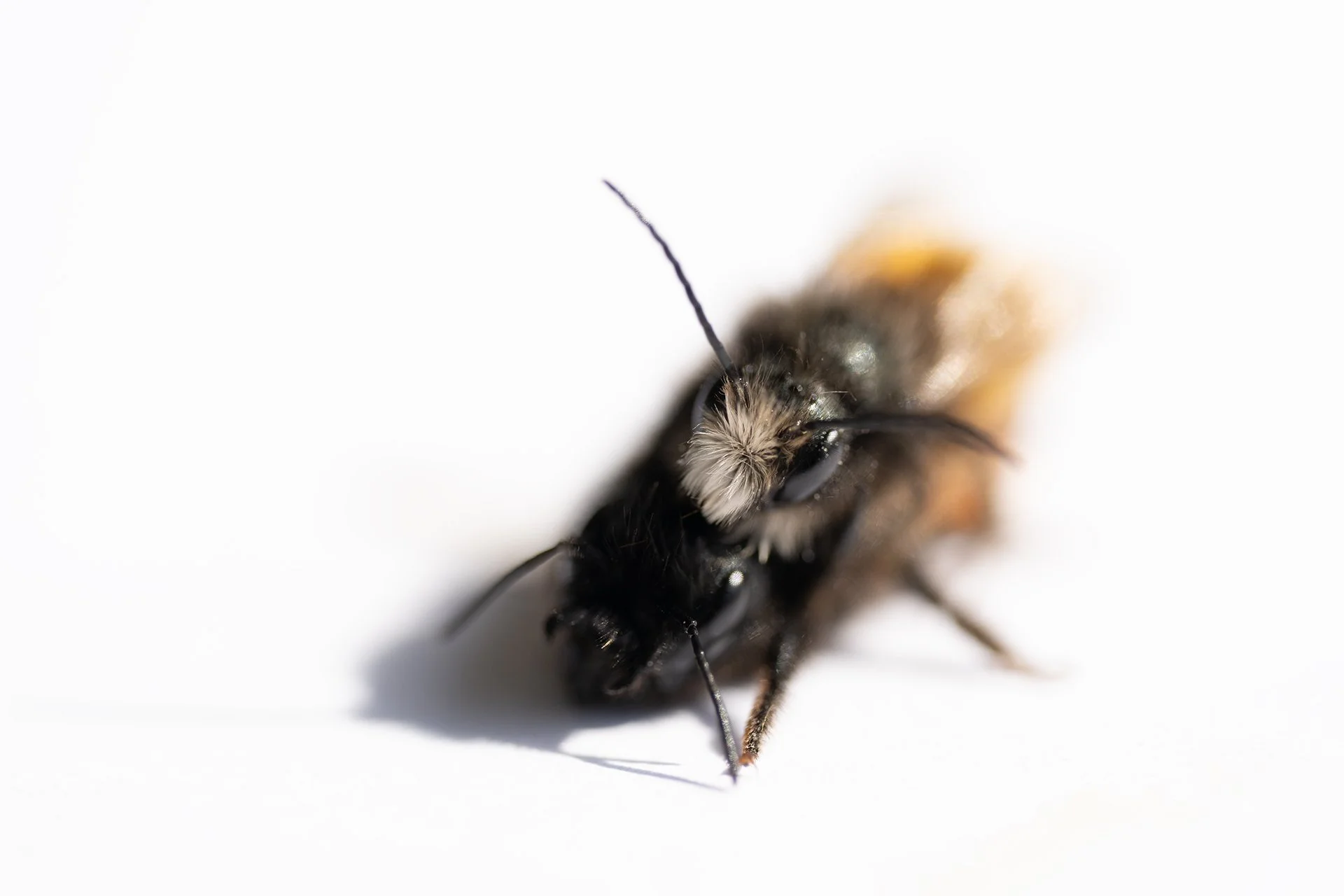
Horned Mason Bee
3.4.2026 - 47° 22′ 36″ N / 8° 31′ 06″ E
This is all of it.
For the horned mason bee — Osmia cornuta — there are no long courtships, no repeated encounters, no shared paths beyond this brief alignment.
Just a moment.
Two bodies, meeting with quiet certainty. Antennae touching, movement reduced to the minimum required. No display, no negotiation — only timing, exactly right.
For a species that spends its life alone, this is the exception.
Short. Necessary. Sufficient. And then it ends.
They separate without hesitation. No lingering, no recognition the next time they pass. The structure of their lives closes around them again — flowers, flight paths, narrow chambers in wood and stone.
Work resumes, as if nothing happened.
But everything did.
The horned mason bee does not make space for romance.
Only for the precise moment in which it briefly becomes possible.
Nikon Z9 - Nikkor Z MC 105 mm 1:2.8 VR S - ISO 160 - f/4.5 - 1/1000
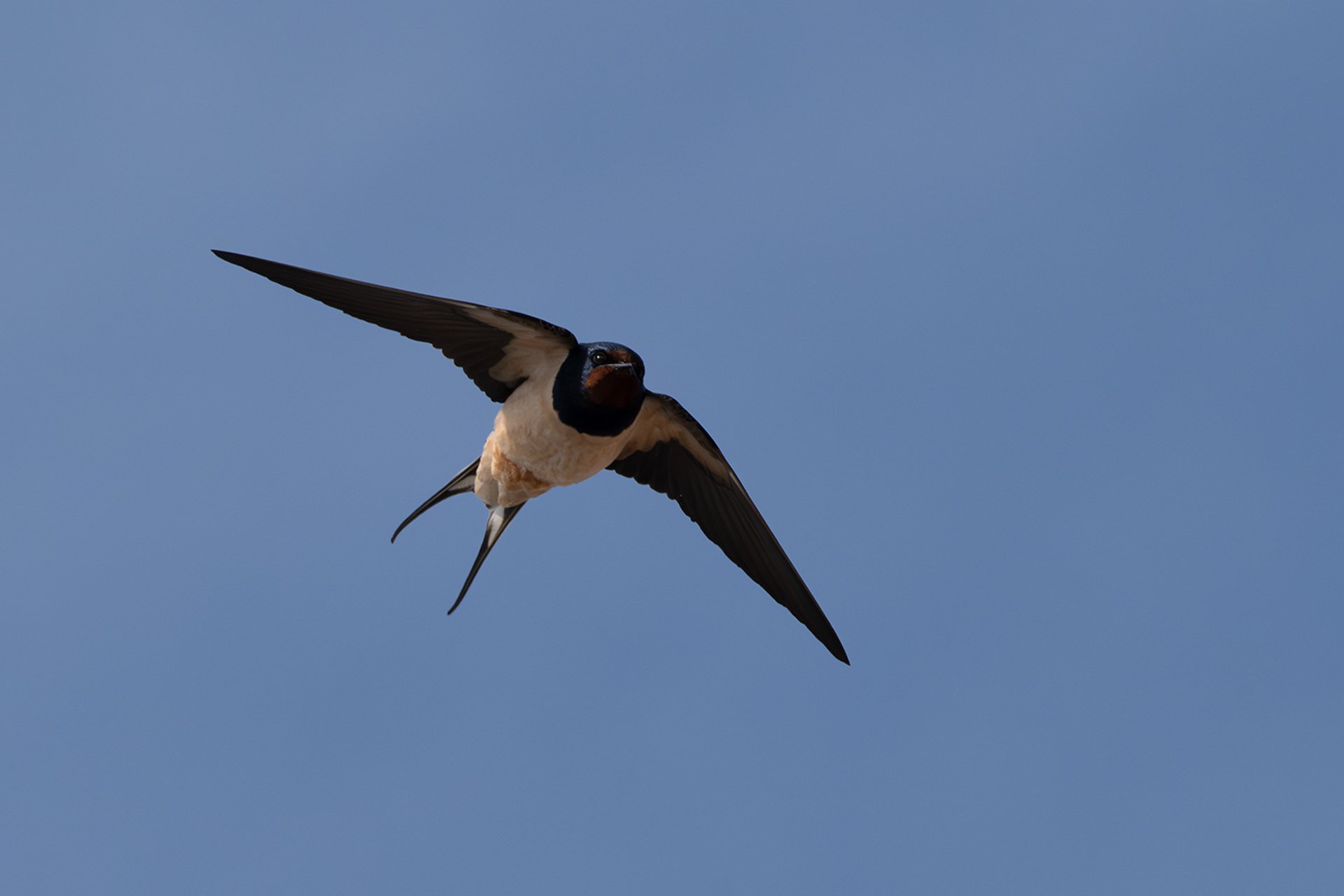
Barn Swallow
29.3.2026 - 45° 56′ 13″ N / 9° 07′ 24″ E
This bird weighs about as much as a few paper clips.
And flies like it has somewhere important to be — even if it never stops long enough to explain where.
The barn swallow — slender, fast, and shaped like an arrow — moves through the air as if it were less an animal and more a concept of motion. Its wings don’t just flap; they sketch trajectories. The body simply follows.
Stillness is more theory than practice.
With its forked tail and long, pointed wings, it seems designed to make speed visible. It hunts insects mid-flight, turning sharply, climbing, dropping, correcting — all within fractions of a second, all without apparent effort.
Where others land, it continues.
Unlike larger birds, it doesn’t claim space through size or volume. It owns it through presence. A brief streak across the sky, and suddenly there is movement, direction, life.
It builds its nests close to humans — under roofs, inside barns, in places that offer shelter without demanding attention.
A quiet agreement.
Barn swallows survive not through strength, but through timing, precision, and a refusal to ever fully stop. Scientists call them adaptable and efficient.
Observers call them momentum with feathers.
The barn swallow is not imposing. It’s a reminder that sometimes progress isn’t about power — it’s about staying in motion long enough that doubt can’t catch up.
Nikkor Z 70-200 mm 1:2,8 VR S - TC-1.4x - ISO 1250 - f/10 - 1/2000
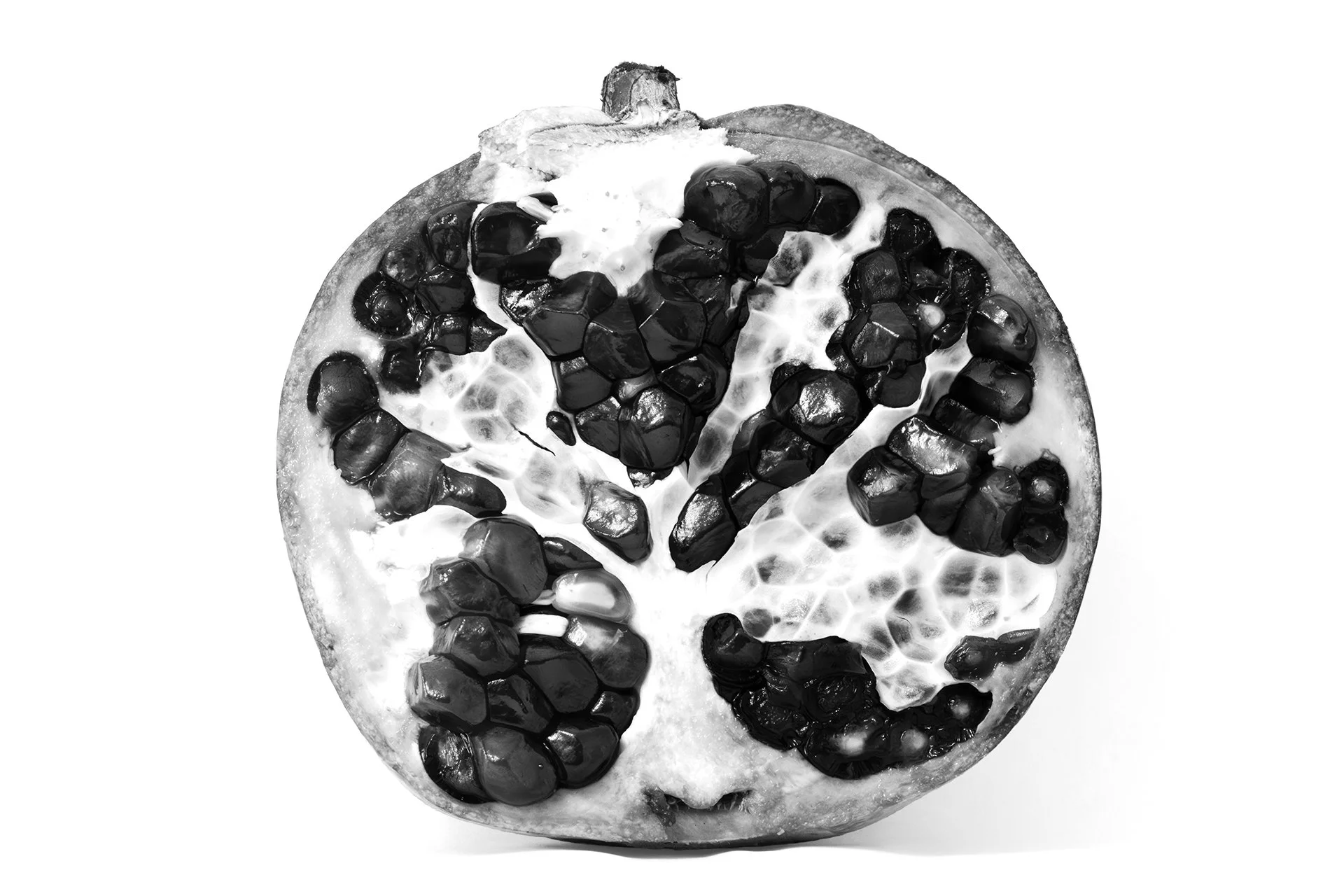
Pomegranate
8.12.2024 - 47° 22′ 36″ N / 8° 31′ 06″ E
Many people call it simply “the pomegranate.” Others call it “that fruit where my patience disappears seed by seed.”
From the outside, the pomegranate is unassuming—round, firm, almost a little guarded. But inside, it hides a small architectural marvel: hundreds of jewel-like seeds, neatly packed into pale, spongy chambers, as if nature had quietly perfected mosaic design.
For thousands of years, the pomegranate has traveled with us. From Persia to the Mediterranean, it has symbolized life, fertility, and abundance. Its structure isn’t accidental—it’s a clever system. Each chamber protects its seeds, keeping them intact and ready, whether to be eaten or to begin again elsewhere.
The real challenge, of course, is less philosophical and more practical: how do you get to the seeds without turning your kitchen into a crime scene?
The solution is surprisingly simple: cut it open, break it apart under water, loosen the seeds—the white membranes float, the edible gems sink. A method almost as elegant as the fruit itself.
Naturally, the pomegranate has also inspired its own quiet ritual: a few patient minutes of picking, stained fingers, and the lingering thought that maybe an apple would have been the more efficient life choice.
No one cuts open a pomegranate expecting a profound experience. And yet, for a moment, you pause—taking in the ordered chaos, the symmetry within randomness and think: nature really took its time here.
Intentional? Maybe. Remarkable? Without question.
Nikon Z9 - Nikkor Z MC 105 mm 1:2.8 VR S - ISO 3200 - f/14 - 1/1
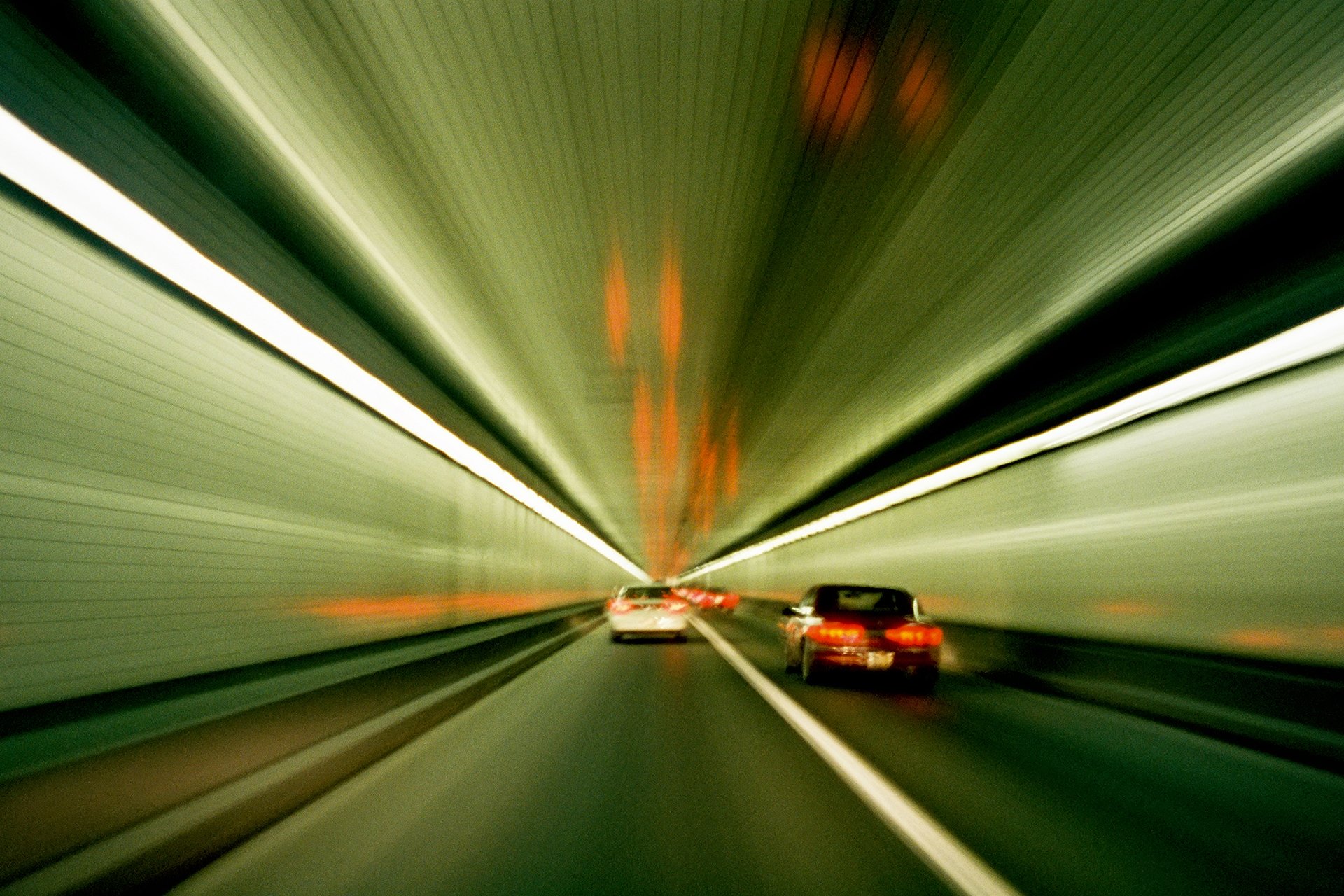
Holland Tunnel
‘90s - 40° 43′ 37″ N / 74° 01′ 17″ W
Many New Yorkers call it simply “The Holland.” Others call it “that tunnel where my patience goes to die.”
When the Holland Tunnel opened in 1927, it was a small miracle of engineering: the first mechanically ventilated underwater road tunnel in the world. Its chief engineer, Clifford Milburn Holland, spent years solving a very practical problem—how to keep thousands of drivers from slowly marinating in their own exhaust fumes beneath the Hudson River.
The solution was surprisingly elegant: massive ventilation fans that completely replace the air in the tunnel every few minutes. It was so effective that engineers around the world copied the system.
Of course, the tunnel also introduced a new New York tradition: sitting perfectly still underground while wondering if walking to New Jersey might actually be faster.
No one enters the Holland Tunnel expecting a profound experience. Yet for a few minutes you glide through a tiled tube beneath a river with thousands of strangers, collectively reconsidering your life choices.
Intentional? Probably not. Uniquely New York? Without question.
Canon IXUS II APS - Canon Lens 23-46mm - 1:4.2-5.6 - Kodak Advantix 400
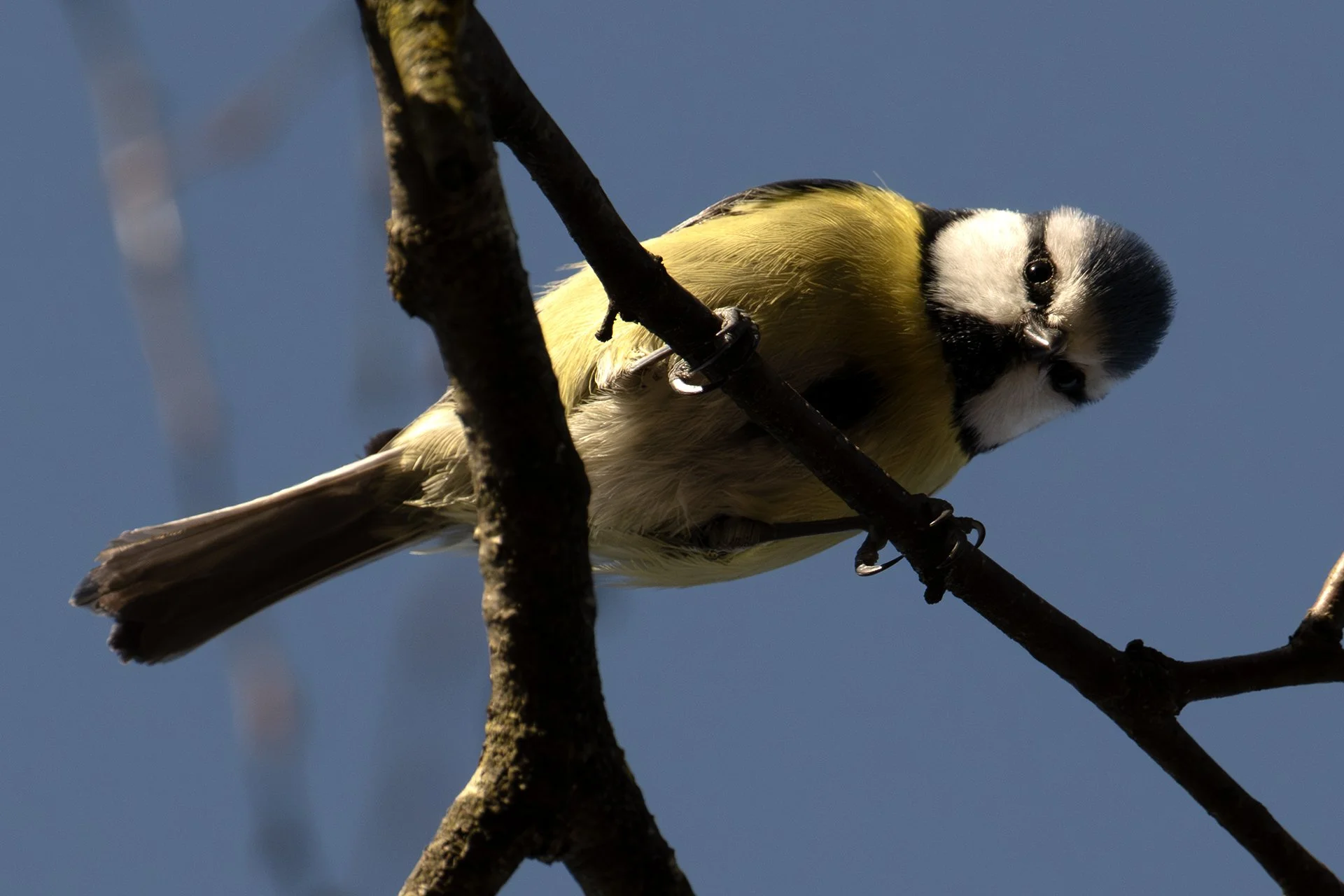
Blue Tit
27.2.2026 - 47° 25′ 57″ N / 8° 29′ 34″ E
This bird weighs about as much as two coins.
And behaves like pure ambition.
The blue tit — small, colourful, and permanently in motion — moves through trees as if branches were merely suggestions. Upright, upside-down, sideways: all acceptable orientations in the pursuit of snacks.
Stillness is not part of its brand.
Despite its size, it shows remarkable confidence, fearlessly inspecting bark, buds, feeders, and occasionally things that are very clearly not edible but worth checking anyway.
Unlike larger birds, it was never assigned mythological responsibilities. No messages from the gods. No symbolic migrations. No baby delivery services.
Just energy.
Blue tits survive winter through curiosity, speed, and an almost professional dedication to eating frequently. Scientists call them intelligent and adaptable.
Observers call them tiny chaos.
The blue tit is not majestic. It is a reminder that sometimes success comes not from size or strength — but from persistence, optimism, and refusing to sit still long enough to doubt yourself.
Nikon Z9 - Nikkor Z 400 mm 1:4,5 VR S - TC-1.4x - ISO 2000 - f/8 - 1/4000
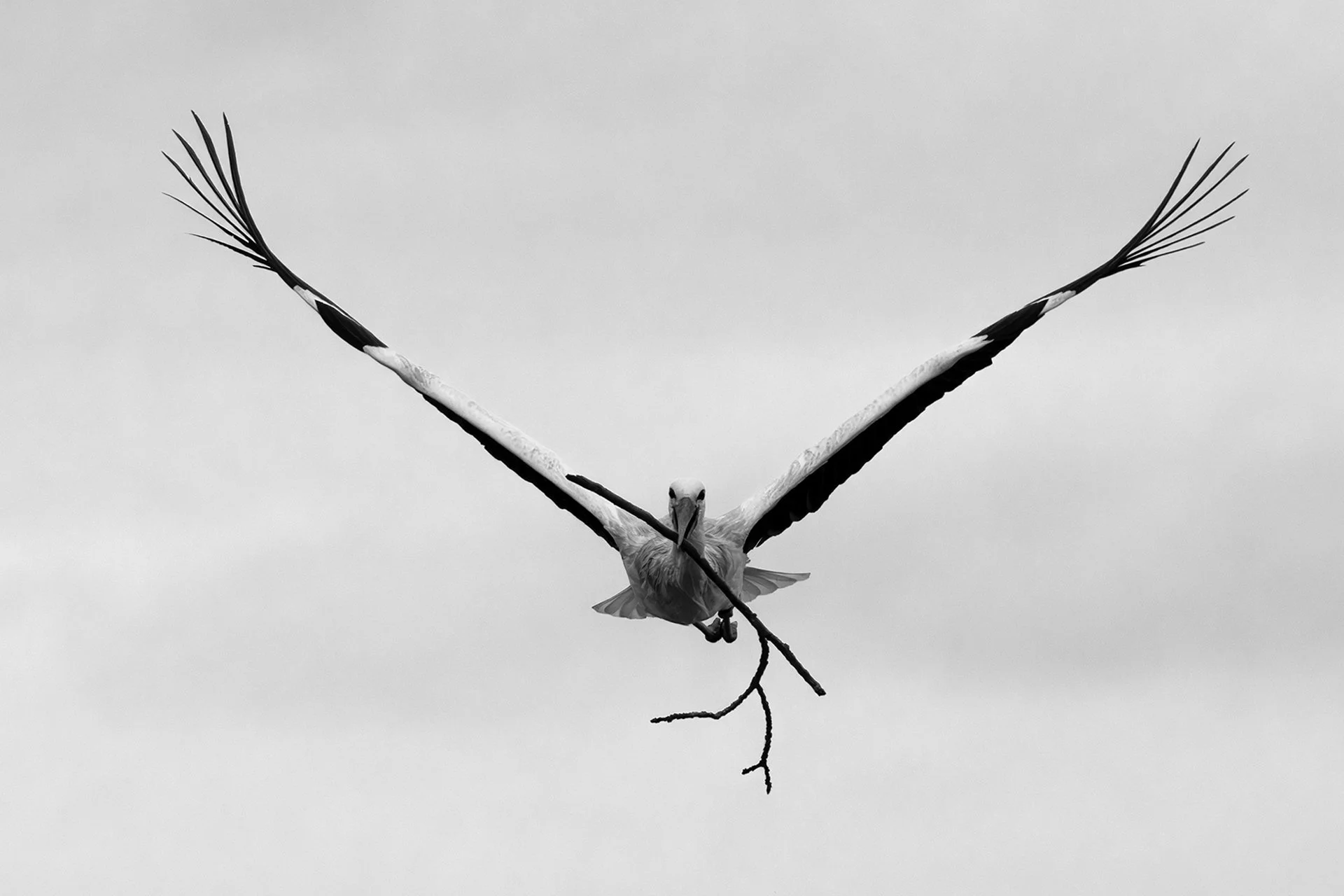
White Stork
21.2.2026 - 47° 23′ 6″ N / 8° 34′ 23″ E
This bird delivers babies. Not metaphorically. Not symbolically. No: quite literally.
Or at least that’s what generations of Europeans decided was the least disturbing explanation for where children come from, outsourcing reproductive logistics to a migratory wetland enthusiast with a two-metre wingspan.
The stork — tall, elegant, mildly judgmental — spends most of its time standing in fields and wetlands, silently evaluating frogs and small mammals as potential lunch.
And yet: Somewhere along the way, it became the unofficial courier of human offspring.
White storks migrate thousands of kilometres every year, crossing continents without GPS, project governance, or a clearly defined target operating model. They return to the same nests — sometimes weighing several hundred kilograms — year after year, turning church towers and chimneys into long-term real estate investments in avian optimism.
Today, they are celebrated as symbols of luck, fertility, and renewal.
Which is interesting, considering that their primary observable activity involves impaling amphibians.
The stork is not a myth.
It is a six-kilogram reminder that if something arrives unexpectedly in your life, there is a reasonable chance it travelled very far — and has no emotional investment in the outcome whatsoever.
Nikon Z9 - Nikkor Z 400 mm 1:4,5 VR S - ISO 1800 - f/4.5 - 1/1600
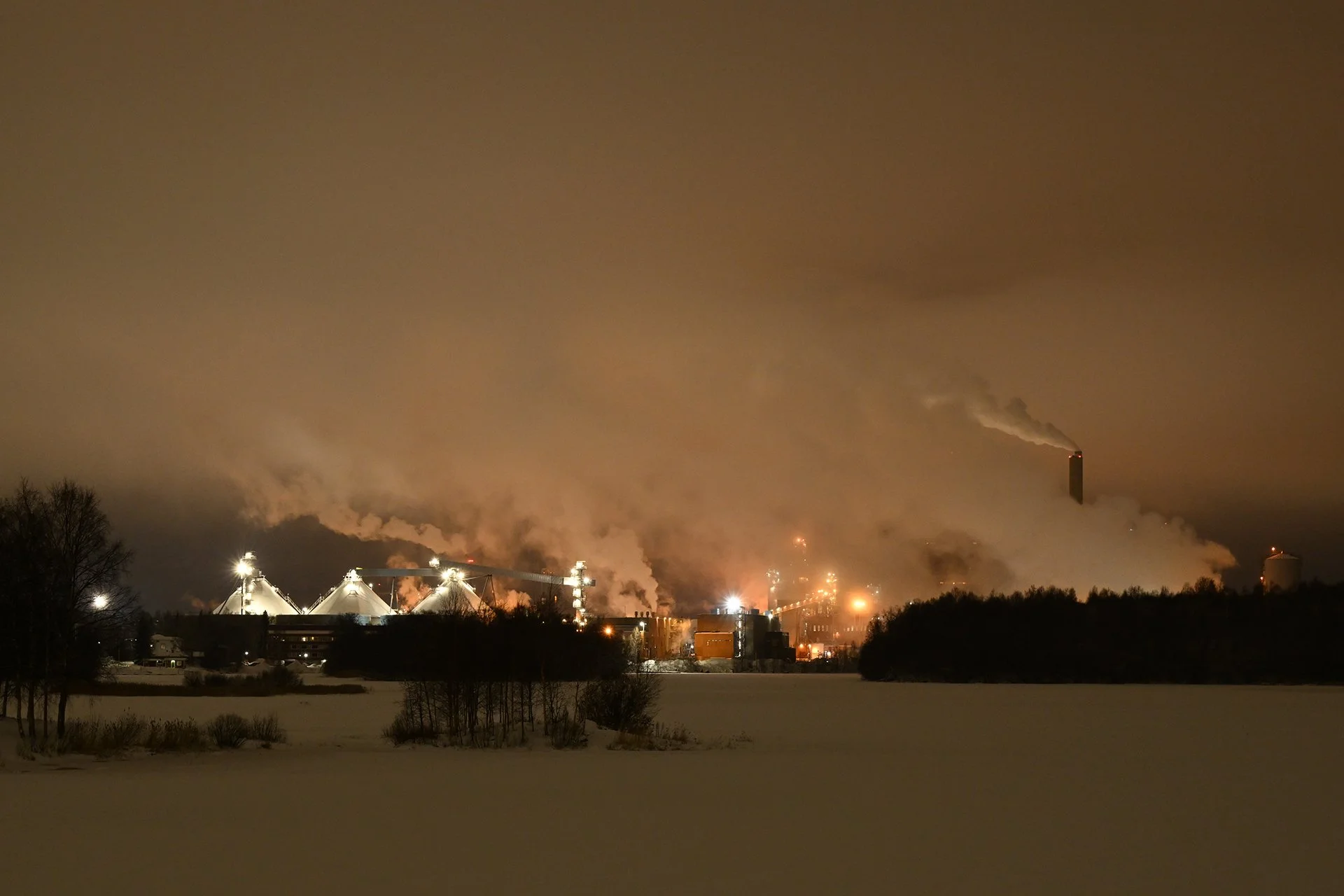
Stora Enso Oulu Mill
27.12.2023 - 64° 59′ 50.0″ N / 25° 25′ 51.5″ E
This factory turns forests into boxes. Not metaphorically. Not symbolically. No: quite literally.
The Stora Enso Oulu Mill sits at the edge of the Bothnian Bay and calmly converts Nordic pine into the brown packaging that will eventually deliver your headphones, your coffee subscription, or that one book you absolutely didn’t need but bought at 01:13 AM anyway.
For decades, this place produced paper. Newspapers. Magazines. Office sheets. The physical manifestation of information.
And then the internet happened.
Demand for printing paper declined. Emails replaced envelopes. News moved to screens. Documents escaped into the cloud.
So the mill adapted.
In 2019, the facility was converted from a traditional paper mill into a packaging board mill. Because if people no longer print things, they still order things. And those things need boxes.
Lots of boxes.
Today, the Oulu Mill produces kraftliner — the outer layer of corrugated cardboard — meaning that somewhere inside the packaging of your next online order, there is a decent chance you’ll find the processed remains of a Finnish forest that once endured six months of darkness and a national education system superior to your own.
Logs arrive. Pulp is cooked. Energy is generated from by-products. Board is produced. Ships depart from the adjacent port. All without ever really leaving the premises.
In 2022, another billion was invested into a new consumer board production line — completing the transformation from “we make things you read” to “we make things that protect the things you ordered while reading less.”
The mill now stands as a monument to a subtle but profound shift:
From communication to consumption. From newspapers to next-day delivery. From content to containers.
The forest is still there. It just arrives at your doorstep now.
Nikon Z9 - Nikkor Z 70-200 mm 1:2,8 VR S - ISO 1600 - f/13 - 1/2
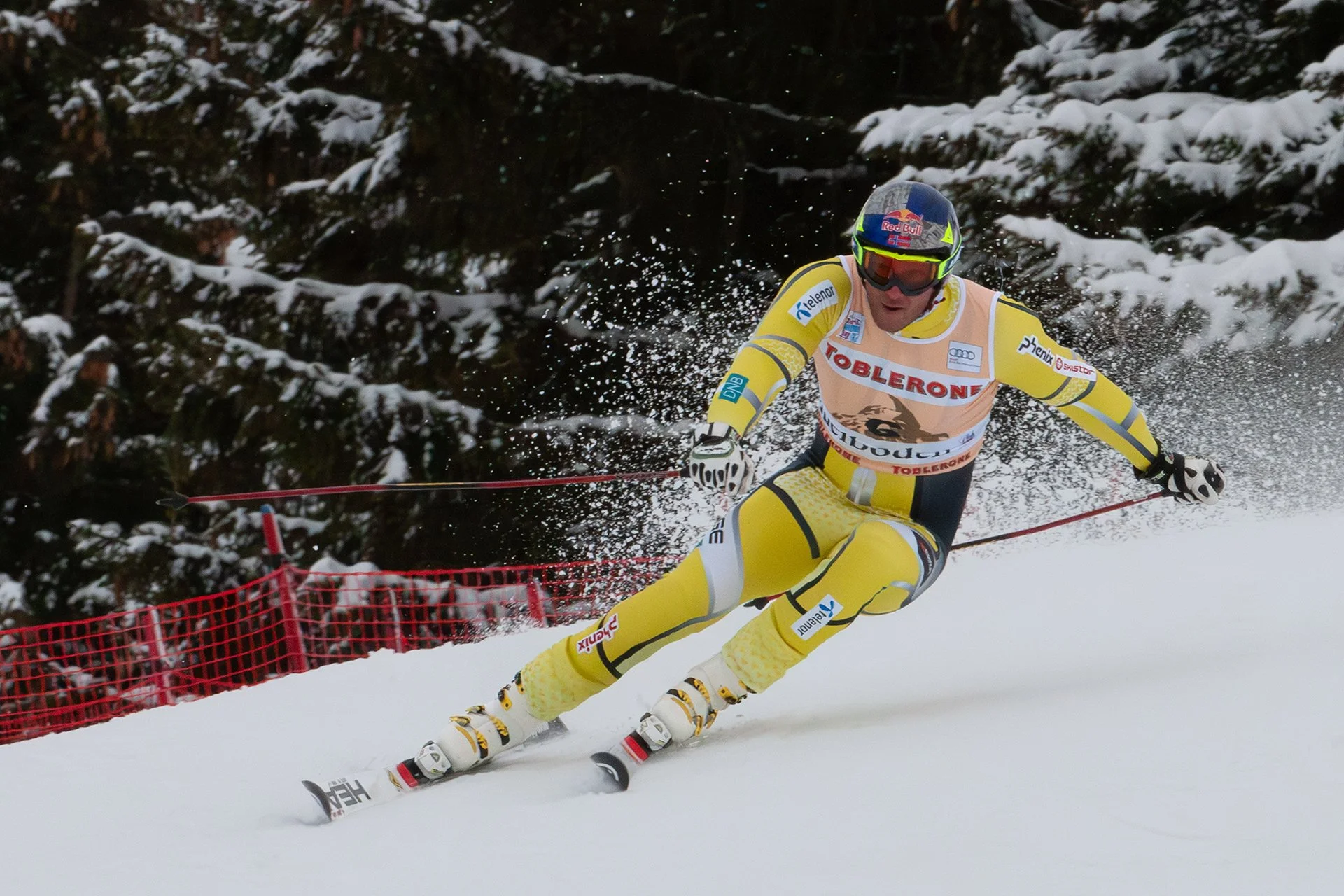
Aksel Lund Svindal
7.1.2012 - 46° 28′ 17.8″ N / 7° 32′ 46.8″ E
Many ski fans affectionately call Adelboden’s Chuenisbärgli “the Wall,” or simply “that place where things go wrong.” Aksel Svindal, third in the overall World Cup standings at the time, would probably have nodded.
On January 7, 2012, Svindal enters the race built for steepness and bad ideas, carrying the quiet authority of someone chasing the season’s big picture. Adelboden, unimpressed by rankings, responds in kind. The first run looks solid, almost convincing. The second run lasts only long enough to remind everyone why this hill enjoys its reputation.
One mistake, one unforgiving section — and Svindal is out.
No one leaves Adelboden casually, least of all after a second-run exit. The mountain doesn’t celebrate victories; it collects respect. That day, it adds one more name to the list.
Nikon D300 - AF-S NIKKOR 200-400mm F4G ED VR II - ISO 3200 - f/16 - 1/1000
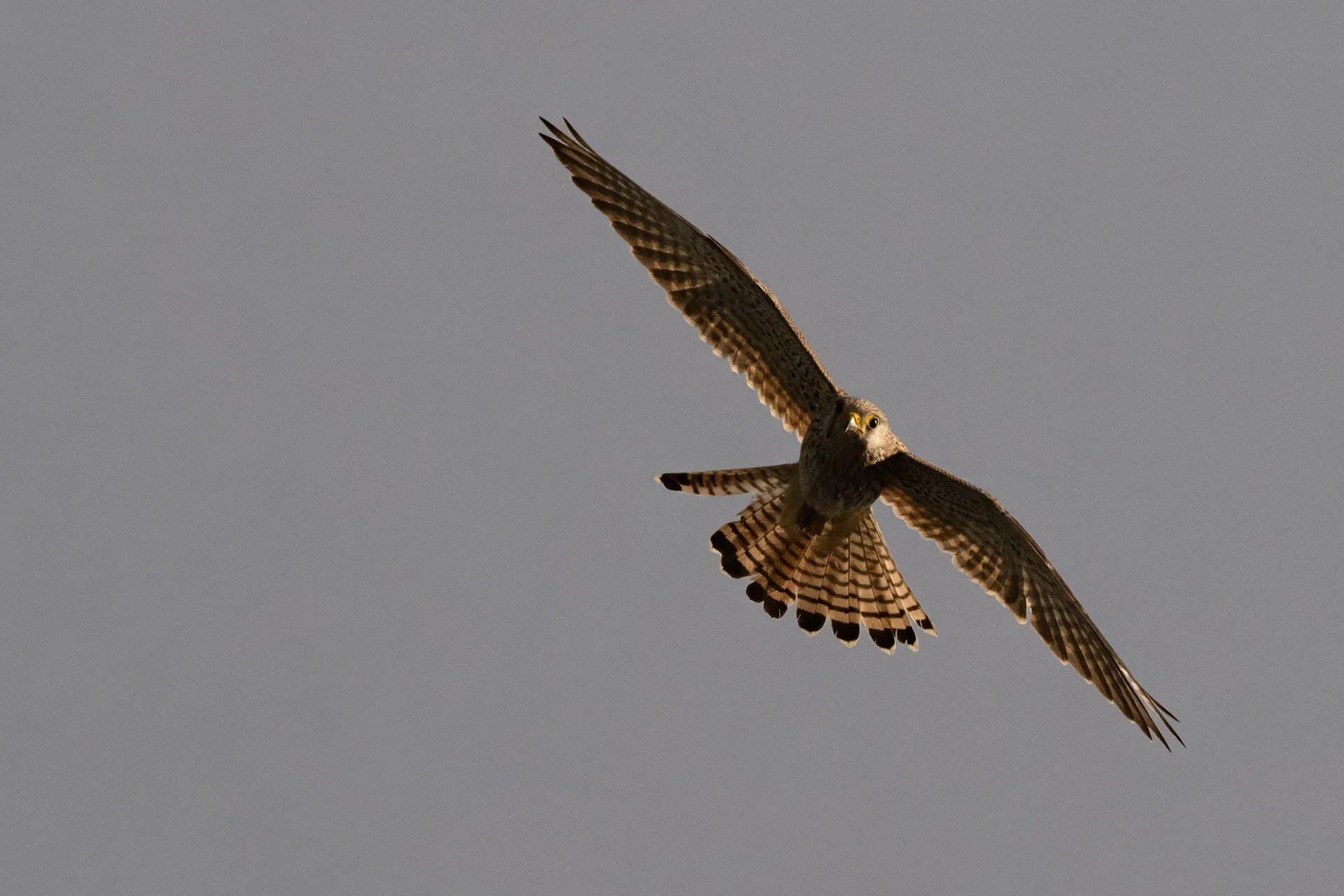
Kestrel
3.5.2025 - 44° 22′ 23″ N / 9° 6′ 16″ E
The kestrel (falco tinnunculus) is patient, focused, and surprisingly calm. It waits longer than it moves and when it acts, it does so with precise, sudden speed.The kestrel stops in midair.
Not by accident. By principle.
It hovers, stares, and treats gravity like a rumor.
Below: mice exist. Above: concentration exists. In between: vibrating determination.
Other birds fly. The kestrel considers. For a while.
Then it drops out of the sky, as if it has suddenly decided to participate in reality.
It’s not an artist. It’s an administrative clerk of the air.
Case file: mouse. Case closed.
Nikon Z9 - Nikkor Z 70-200 mm 1:2,8 VR S - ISO 2000 - f/9 - 1/5000